
The use of press publications by AI chatbots may infringe publishers’ rights in the light of the Opinion of First Advocate General Professor Maciej Szpunar
The retrieval of press publications from the Internet and their reuse by AI chatbots to generate answers may infringe publishers’ rights. In his Opinion in Case C-250/25 Like Company, First Advocate General Professor Maciej Szpunar identifies when that process constitutes reproduction or making available to the public within the meaning of EU law. For businesses, the key considerations are how the publication is obtained, the extent to which its content is used, and the role of the service provider.
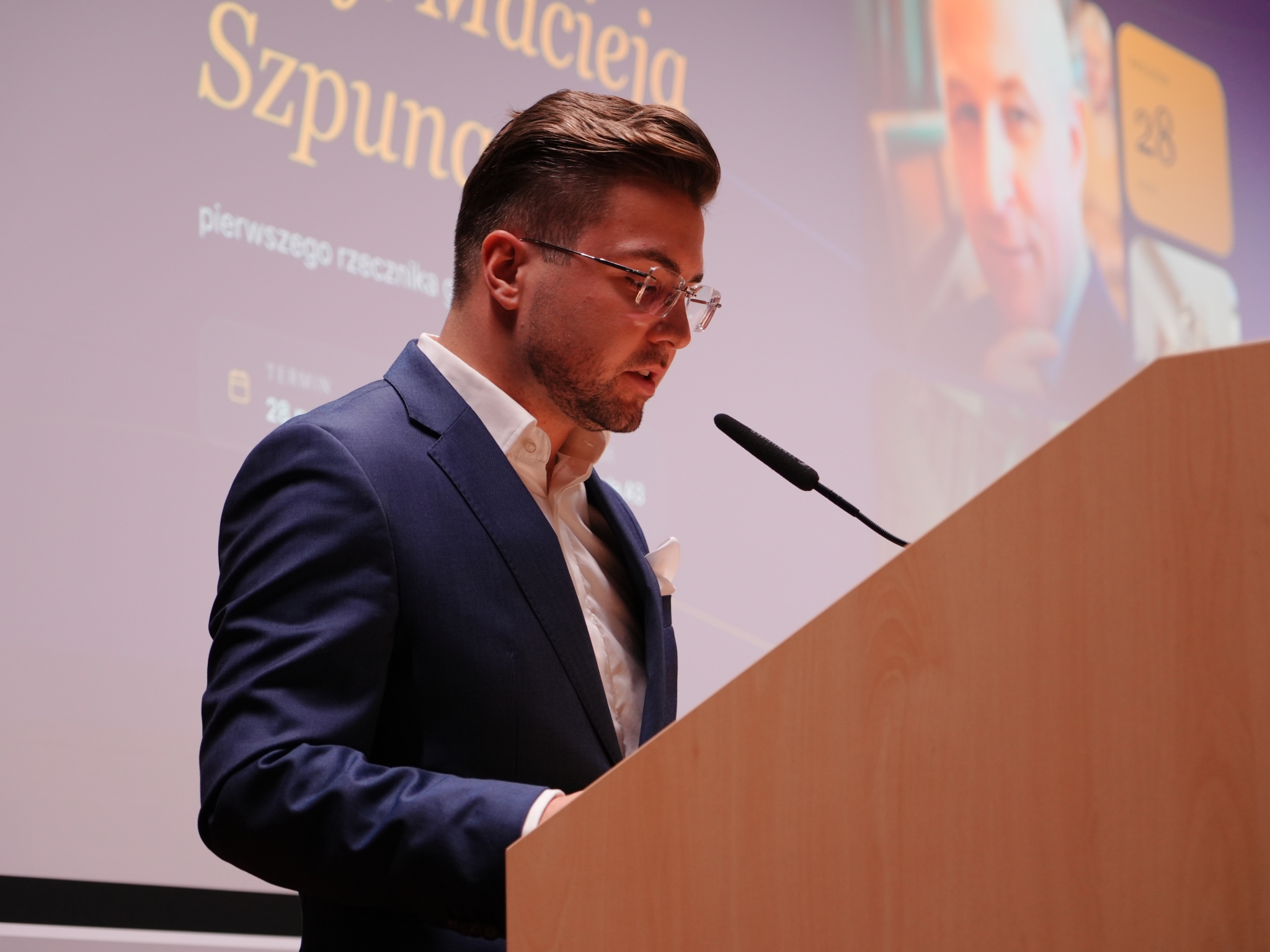
On 28 October 2026, I co-hosted a series of lectures by Professor Maciej Szpunar, First Advocate General of the Court of Justice, at the Faculty of Law and Administration of the University of Warsaw. Organised jointly by the Faculty and the European Law Section of the Warsaw Bar Association, the event brought together a discussion of the digital dimension of the internal market and reflections on the Court’s role within the EU’s institutional framework. A recurring theme of our discussion was how the interpretation of EU law shapes the conditions in which market participants operate.
Six days later, on 3 November 2026, Professor Szpunar delivered his Opinion in Like Company v Google Ireland Limited (C-250/25), the first case concerning generative AI to reach the Court. It raises a specific legal question: whether a chatbot powered by a large language model, by retrieving a press publication, using it to generate an answer and providing that answer to the user, engages the publisher’s exclusive rights. The proposed answer has direct implications for the provision of AI services and the commercialisation of press content.
The legal issues
Like Company, a Hungarian operator of web portals, alleged that Google had made unauthorised use of its articles in the Gemini service. The protection sought is based on the specific copyright-related right granted to press publishers under Article 15(1) of Directive 2019/790 (CDSM). Read together with Articles 2 and 3(2) of Directive 2001/29 (InfoSoc), that provision enables publishers to control certain forms of reproduction and making available to the public of their publications online by information society service providers.
The analysis focuses on Retrieval-Augmented Generation, or RAG. When processing a user query, the chatbot retrieves material from external sources and uses it to prepare its answer. This allows it to take account of up-to-date information. Both the acts performed when retrieving and processing the publication and the content ultimately provided to the user are legally relevant.
The First Advocate General proposes that the questions concerning model training should not be addressed: it has not been established in these proceedings that Like Company’s articles were used for that purpose and, in his view, training does not itself constitute online use falling within the publisher’s specific right. The discussion of training and the exception for text and data mining is therefore supplementary. The principal issue concerns the real-time use of publications by a service in operation.
Reproduction when retrieving publications and generating answers
Copying, also referred to in the legislation as reproduction, may already occur at the stage of retrieving and analysing a publication. Technical copies of the material are then created within the system. Some of these operations may fall within the temporary reproduction exception under Article 5(1) of Directive 2001/29 (InfoSoc), provided that the conditions laid down in that provision are satisfied.
In this context, the First Advocate General attaches importance to the lawfulness of access. Where a chatbot circumvents effective technical measures restricting access to a publication or its automated retrieval, such as a paywall, the copies created in that process cannot be justified under that exception. Assessing the service therefore begins with how the system obtained the source material.
The answer itself requires a separate assessment. On the proposed interpretation, it falls within the scope of the publisher’s right where it reproduces the publication’s form of expression in a recognisable manner, to such an extent that it can entirely replace access to the original for the user. This does not require the article to be reproduced word for word. A paraphrase may also retain its distinctive arrangement, structure and presentation of the content.
The boundary of protection, however, lies between facts and the form in which they are expressed. Communicating the same news in an answer that does not reproduce the protected form of the publication is insufficient to establish reproduction. Protection of the publisher’s investment does not confer exclusivity over information itself. A loss of some website traffic, while economically significant, is likewise no substitute for establishing infringement of a particular right.
Making available to the public requires a separate assessment
The second legal characterisation concerns making the publication accessible to recipients through the chatbot. In the First Advocate General’s view, making available to the public occurs, as a rule, where the protected form of the publication is systematically recognisable in answers to related queries to an extent that enables those answers to substitute for access to the original.
The individual nature of a conversation with a chatbot does not, in itself, preclude such making available from being public. What matters is whether an indeterminate and sufficiently large number of users can access the publication. For the purposes of the dispute, this means examining how the service operates across repeated uses. A single answer may call for assessment as an act of reproduction, but does not automatically establish systematic making available to the public.
The chatbot provider’s liability
A finding that a publication has been reproduced or made available to the public through the service raises a further question: whether the act in question can be attributed to the chatbot provider. The First Advocate General links the provider’s liability to circumstances in which such acts are inherent to its business model, or the provider has failed to put in place appropriate measures to counter infringements credibly and effectively.
The design of the service and the effectiveness of its safeguards are therefore relevant. The Opinion refers in particular to compliance with access restrictions and measures limiting the generation of answers that too closely resemble protected publications. Where appropriate measures have been implemented, the Advocate General accepts that the provider may be relieved of liability for occasional infringements. The mere fact that the user initiated the query does not, however, determine the provider’s liability.
What the proposed interpretation means for business
In my view, the principal value of this Opinion lies in its precise separation of the elements of the legal assessment. The lawfulness of obtaining the publication, the use of its protected form of expression and the possibility of attributing those acts to the provider must each be examined. Each issue requires different findings and may lead to different business decisions.
A service may obtain lawful access to material yet generate answers that reproduce the publication’s protected form. It may also present facts independently while obtaining them by circumventing access controls. In the first case, the focus should be on how answers are constructed and the scope of the authorisations obtained. In the second, it is necessary to assess how material is retrieved. Resolving one issue does not automatically resolve the other.
For a publisher, this means linking the claim to a specific use of the publication. Relevant evidence will concern access to the material, a comparison of the publication with the chatbot’s answers and, where making available to the public is alleged, proof that such use is systematic. Economic loss must be assessed by reference to the scope of the right alleged to have been infringed.
For a provider or a business deploying a similar service, this means identifying who controls the retrieval of source material and the formulation of answers. Due diligence on the counterparty and the agreement should address the legal basis for using publications, the scope of any licences required, and the safeguards actually in place. If the product’s value depends on the regular use of particular content, the terms of access to that content also affect both the cost of continuing to offer the service and the ability to do so.
I find it convincing that this analysis preserves the free flow of information while protecting specific publications. The greatest difficulty will lie in the practical application of the criterion of a recognisable form of expression and substitution for the original. Merely labelling an answer as a summary, or setting a limit on its length, cannot replace an assessment of how the product actually operates.
Although not binding, the Opinion already enables a more precise assessment of the risks and costs of business models based on the use of third-party content by AI. For a press publisher, a decline in website traffic or advertising revenue does not, in itself, establish an infringement of its right; what may be relevant, however, is unlawful access to the publication or the reproduction of its protected form in an answer that substitutes for the original for the recipient. In practice, this increases the importance of the terms of access to archives and current publications, and the scope of their licensing to AI providers. Digital creators and influencers should, in turn, examine whether their agreements with brands, agencies and platforms cover the further use of material in AI services, who is authorised to grant such permission, and whether the agreed remuneration accounts for that exploitation. Their protection will derive primarily from copyright in specific works; they do not automatically benefit from the specific right of press publishers. For businesses using AI for media monitoring, creating news services or preparing content, the provenance of the material, the way answers are generated and the effectiveness of safeguards against infringement become significant considerations. The costs of the necessary authorisations and safeguards, and of any changes to data sources, should therefore form part of the assessment of the deployment’s profitability. The Opinion of First Advocate General Professor Szpunar thus demonstrates how the interpretation of EU law helps shape the conditions for doing business in the digital market, defining the limits of the use of third-party content and the scope for protecting the commercial value of one’s own creative work.
Franciszek Wiącek, Advocate, Partner
Chair of the European Law Section of the Warsaw Bar Association
Sources
- CJEU Press Release No 155/26 of 3 November 2026 in Case C-250/25 Like Company, Polish version.
- CURIA Opinion in Case C-250/25 Like Company and Advocate General Maciej Szpunar’s explanation.
- Curia Web TV Maciej Szpunar on the Opinion in Case C-250/25 Like Company.
- Opinion of the Advocate General of 3 November 2026, C-250/25, ECLI:EU:C:2026:919, in particular points 46–58, 176–222, 229 and 239–240.
- WPiA UW report on Professor Maciej Szpunar’s lecture series of 28 October 2026.
Photographs courtesy of the Promotion Section of the Faculty of Law and Administration of the University of Warsaw.
Return